


October 12, 2026 By Admin
Planning a college or corporate cricket tournament? Get a practical guide to formats, budgets, registrations, team selection, and match-day rules.
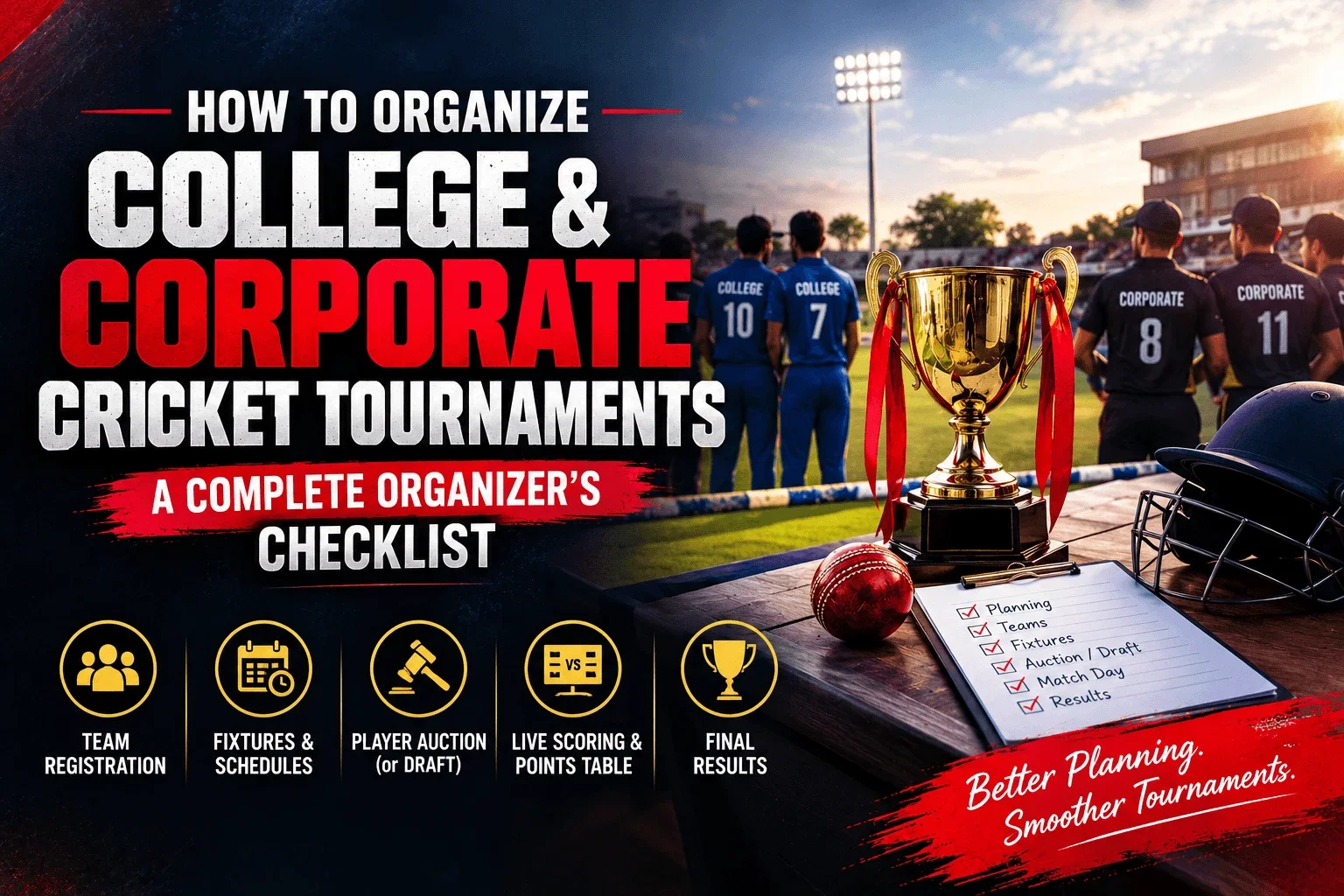
How to Organize College & Corporate Cricket Tournaments
If you've ever tried to organize college and corporate cricket tournaments, you already know the ground booking is the easy part. The real work is registrations, team selection, fixtures and keeping everyone informed without forty WhatsApp group messages a day. Here's a practical, step-by-step walkthrough that actually holds up on match day.
Choosing Your Tournament Format
Before anything else, decide what kind of event you're actually running, it shapes everything downstream: number of matches, playing time, venue needs and your overall budget.
Inter-department matches, inter-college leagues, or a campus-wide championship.
Department-wise matches, an inter-company league, or part of a broader employee sports day.
Finishes faster, suits tighter timelines, perfect for a one-day fest or weekend event.
More matches per team and a fairer shot at the final, but needs a longer window and more bookings.
Once the format is decided, lock in the match details: team size, overs per innings, number of substitutes, and tournament dates, all before registrations open.
Budget, Venue & Scheduling Around Real Commitments
Build a budget before you announce anything. Ground rental, equipment, umpires, scoring arrangements, trophies, refreshments and any medical support all need a line item, even a rough one.
- College events: check campus ground availability against academic schedules and exam dates
- Corporate events: coordinate with HR and department heads so matches don't clash with work commitments
- Confirm venue booking terms, playing conditions and a weather contingency plan in advance
Quick Takeaway
The organisers who struggle least on match day aren't the ones with the biggest budget, they're the ones who locked venue, dates and format before a single registration form went out.
Registration and Team Selection: Picking the Right Method
A clear registration process saves you from chasing missing details halfway through the tournament. Three steps cover it:
-
Collect the essentials
Player names, contact details, department or organisation, and eligibility information, with a firm deadline and rules shared upfront.
-
Verify before finalising
Check for duplicate entries, incomplete details and eligibility issues before any team list is locked in.
-
Share and go digital
Send the confirmed list to captains or representatives. For larger tournaments, a digital process makes updates far easier to manage.
Four Ways to Build Your Teams
| Method | Best For |
|---|---|
| Department-wise teams | Departments or colleges competing as existing, known groups |
| Random allocation | Informal events focused on participation and mixing people up |
| Player draft | Team representatives taking turns picking from the player pool |
| Player auction | Team owners bidding for players with a predefined budget and rules |
If you're leaning toward an auction, finalise team budgets, squad limits, player eligibility and bidding rules before the event. CricAuction's online cricket player auction guide walks through the full setup process if that's the direction you're taking.
Pro Tip
Pick a team selection method that fits your participant count and timeline, not the one that looks most exciting. An auction is a great fit when players and organisers both want that IPL-style energy, but a department draft can be faster and just as fair for a smaller event.
Fixtures, Rules and Scoring That Hold Up Under Pressure
Once teams are confirmed, publish a fixture list early, match dates, timings, opponents and venues, so participants can plan around classes, exams or office hours.
What Your Rulebook Should Cover
- Overs per innings and match duration
- Playing XI and substitute rules
- Points awarded for wins, ties and no-results
- Knockout qualification and tie-break procedures
- Late arrival, walkover and disciplinary rules
- Umpire decisions and the process for raising disputes
For league formats, define the points table and net-run-rate rules before the first ball is bowled. Consistent, written rules are what prevent confusion when teams end up tied on points.
Assign responsibility for scoring, umpiring, updating results and communicating schedule changes, and test the scoring process before the opening match. Digital scoring tools can help you maintain scorecards and share live updates without relying entirely on handwritten records or scattered messages.
Results, Awards and the Tournament Wrap-Up
Verify the final score, update standings promptly, and share results through one channel everyone already uses, not a dozen scattered group chats.
Recognise standouts with awards like Player of the Tournament, Best Batter, Bowler or All-Rounder, it builds participation and keeps people coming back next season.
Planning an Auction-Based Tournament?
Run live bidding, track team budgets and share final squads instantly, without a single spreadsheet.
Explore CricAuction →Quick Pre-Match Checklist
Run through this before the opening ball of your college or corporate cricket tournament:
-
Format, dates and venue confirmed
Knockout or league, locked in alongside a confirmed ground and tournament window.
-
Budget and responsibilities assigned
Ground, umpires, scoring and refreshments all accounted for, with one person owning each.
-
Player registrations verified
No duplicates, no missing details, eligibility checked before teams are finalised.
-
Teams and captains finalised
Whether through draft, auction or department allocation, squads are locked and shared.
-
Rules and fixtures shared
Published early enough that participants can plan around classes or work.
-
Umpires and scoring arrangements confirmed
Tested before the opening match, with one person verifying each result.
-
Match-day communication plan ready
One clear channel for schedule changes, scores and standings.
-
Result verification and awards planned
Who confirms the final score, and what awards close out the tournament.
Important
This checklist is a practical starting point, not a substitute for your institution's or company's own event, safety and ground-booking policies. Always confirm venue, insurance and medical arrangements directly with your facility and relevant departments before finalising your tournament.
Frequently Asked Questions
What's the easiest way to organize a college cricket tournament?
Start by locking the format (knockout or league), confirm ground availability against the academic calendar, then open registrations with a clear deadline. Keep the rulebook simple and share it before matches begin.
How is a corporate cricket tournament different to organize?
The biggest difference is scheduling around work commitments rather than classes. Coordinating with HR and department heads early helps avoid clashes, and matches are often held on weekends or after office hours.
Should I use a player draft or a player auction for team selection?
A draft is simpler and faster to run. An auction adds energy and a competitive, IPL-style feel, but needs base prices, team budgets and bidding rules set up in advance. Choose based on your participant count and how much time you have to plan.
What should a cricket tournament rulebook always include?
At minimum: overs per innings, playing XI and substitute rules, points for wins and ties, tie-break procedures, and a clear process for disputes and umpire decisions. Share it with every team before the first match.
How do I keep scoring accurate across a multi-day tournament?
Assign one person to verify each result before it's published, test your scoring process ahead of the opening match, and use a digital tool where possible so standings update without manual recalculation.
Final Thoughts
A successful college or corporate cricket tournament doesn't happen by chance, it comes from clear rules, organised registrations, realistic scheduling and reliable match-day coordination. Start with a simple plan, communicate decisions early, and use digital tools where they genuinely save time.
- Lock your format, venue and dates before registrations open
- Pick a team selection method that fits your group size and timeline
- Write and share your rulebook before match one, not during it
- Verify every result and keep one clear communication channel
- Close the tournament with awards that recognise standout performances